
Skip to content

Free written estimatesLocal crews

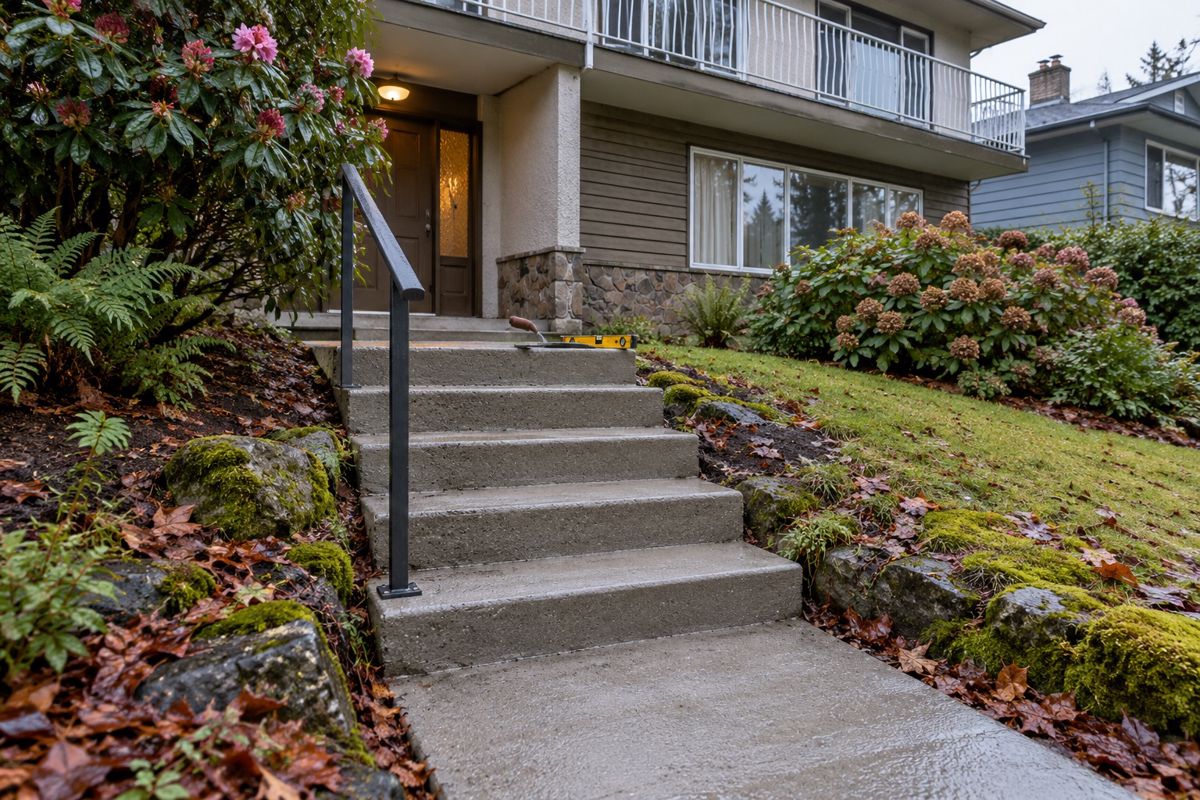
New concrete steps and front path up a sloped Vancouver front yard

Walkways and steps in Vancouver, BC

Concrete sidewalks and walkways in Vancouver, safe in the wet

Front paths, side paths, garden walkways and concrete steps, finished for grip on rainy days and for easy drainage.

  • Grip-friendly finishes for rain and moss
  • Steps and landings laid out to the code
  • Edges and joints planned to look clean

What is involved in a new concrete walkway or steps?

A walkway is a narrow slab, so it looks easy. The details are what make it last. A typical job has these steps.

  1. Mark the path and check where water will go.
  2. Remove old paving, grass or soil to the right depth.
  3. Build a compacted gravel base with a slight cross fall for drainage.
  4. Set forms, add reinforcement where needed and plan joint spacing.
  5. Pour and finish, usually with a broom or light texture.
  6. Cure the concrete, and remove forms once it is strong enough.

Steps take more care. Each rise and run needs to be even, with a landing at the top and bottom. The building code sets limits on step size and handrails, and a stair that is uneven by a small amount can cause trips. Steps on a sloped front yard, as many Vancouver houses have, are often poured with a retaining edge or a short wall alongside. For wider pads and decorative surfaces, see our stamped concrete page.

Who owns the sidewalk in front of a Vancouver house?

This catches many owners out. The public sidewalk and the boulevard between the sidewalk and the road are generally City property, even though they sit in front of your house. The path from the sidewalk to your front door is on your lot and is yours to build and maintain.

That difference matters for permits and for who does the work.

  • A private walkway or steps on your own lot is usually a simple project, though steps and retaining edges may be covered by the building code.
  • Work on the public sidewalk, a driveway letdown or the boulevard is generally controlled by the City of Vancouver and may need approval or City crews.

Rules change, so check with the City before you pay for any work near the street. If you are not sure where your property line sits, a survey or your property records can show it. We are happy to talk through what falls on your side of the line when we visit.

How do you keep concrete walkways safe in the rain?

Vancouver's wet seasons make grip the main safety issue. Moss, algae and fallen leaves can turn a smooth path slick in days, especially on the shady north side of a house or under dense trees.

These choices help:

  • Broom or light texture. A brushed finish gives grip without catching on shoes or snow shovels.
  • Exposed aggregate. Stones in the surface give strong grip and hide dirt.
  • Cross fall. A slight slope sideways keeps water from pooling.
  • Good edges. Soil and mulch that spill onto the path hold moisture and feed moss, so keep the edges tidy.
  • Lighting and handrails. Steps and sloped paths are safer with both, and handrails may be required by code.

Avoid smooth, glossy finishes on steps and ramps. When the path is already built, a pressure wash and a mild moss treatment keep it safe. If a path has already cracked or lifted, repair or resurfacing may fix the trip hazard.

Walkways look like small jobs, but a few details change the cost a lot.

  • Length and width. A wider path uses more concrete and takes more finishing time.
  • Steps and landings. Forming steps takes much more labour than a flat path.
  • Slope. A steep front yard may need a retaining edge, handrails or a stepped layout.
  • Removal. Breaking out old concrete or pavers and hauling away the debris adds work.
  • Access. A path in a narrow side yard may need wheelbarrows, not a truck chute.
  • Finish. Colour, exposed aggregate or stamped borders cost more than a broom finish.
  • Small-load charges. Ready-mix suppliers can add fees for small orders, which affects short paths.

A written quote that lists the length, width, thickness, finish and removal makes it easy to compare offers.

How long does a walkway take, and when should you call?

A simple path can be prepared and poured in a day or two, while steps and sloped sites take longer. The concrete then needs time to cure. Light foot traffic is often fine after a day or two, but give it about a week before regular use, and longer before heavy loads like wheelbarrows of soil. Rain during the pour is the biggest cause of delays, so a flexible schedule helps.

Call when a path is cracked or sunken, when steps feel uneven, when moss keeps making the surface slippery, or when you are planning a new entry. If a driveway sits next to the walkway, you may want to coordinate with the driveway work so edges and levels match. The home page lists everything we quote. Send the short form with the length, the slope and a few photos, and we will arrange a visit.

  • Free written estimates
  • Local crews
  • Clear timelines
  • Site cleanup included

Step 1 of 3

What do you need?

Questions about concrete in Vancouver

Can you build concrete steps on a sloped front yard?

Usually, yes. Steps on a slope need even risers and treads, a solid base, and often a landing or a retaining edge. The building code sets limits on step size and handrails, so the layout has to meet them. We look at the slope and the entry before we quote.

Do I need a permit for a private concrete path?

A simple path on your own lot is often treated more lightly than steps with a retaining wall or work on the street side. Rules can change, so check with the City of Vancouver before you start. Anything that touches the public sidewalk or boulevard is a separate matter.

Can I pour a walkway over my old path?

A new slab over old concrete usually adds height and can create a bad edge at doors and steps. In most cases the old path should come out, the base should be checked, and new concrete poured to the right level. A thin overlay can sometimes work if the old slab is sound.

What finish is safest for a wet walkway?

A broom finish or exposed aggregate gives dependable grip in rain. Avoid smooth steel-trowelled surfaces and glossy sealers outdoors. Also keep soil, mulch and plants off the edges, since damp debris is a major cause of moss and slippery patches. A light sweep each week in autumn helps.

Why do walkway slabs crack or lift?

The common causes are a weak base, tree roots, water running under the slab and no control joints. Cracks that are narrow and flat are often cosmetic. A raised edge is a trip hazard and should be looked at, since it often gets worse over time.

How it works

  1. Tell us about the project

    Size, finish and goals.

  2. Site visit and quote

    We measure and price it in writing.

  3. Form, pour, finish

    Base, forms and finish done in the right order.

Ready when you are

Call now or request a quote online.

(604) 555-0140
Get my free concrete quote