
Skip to content

Free written estimatesLocal crews

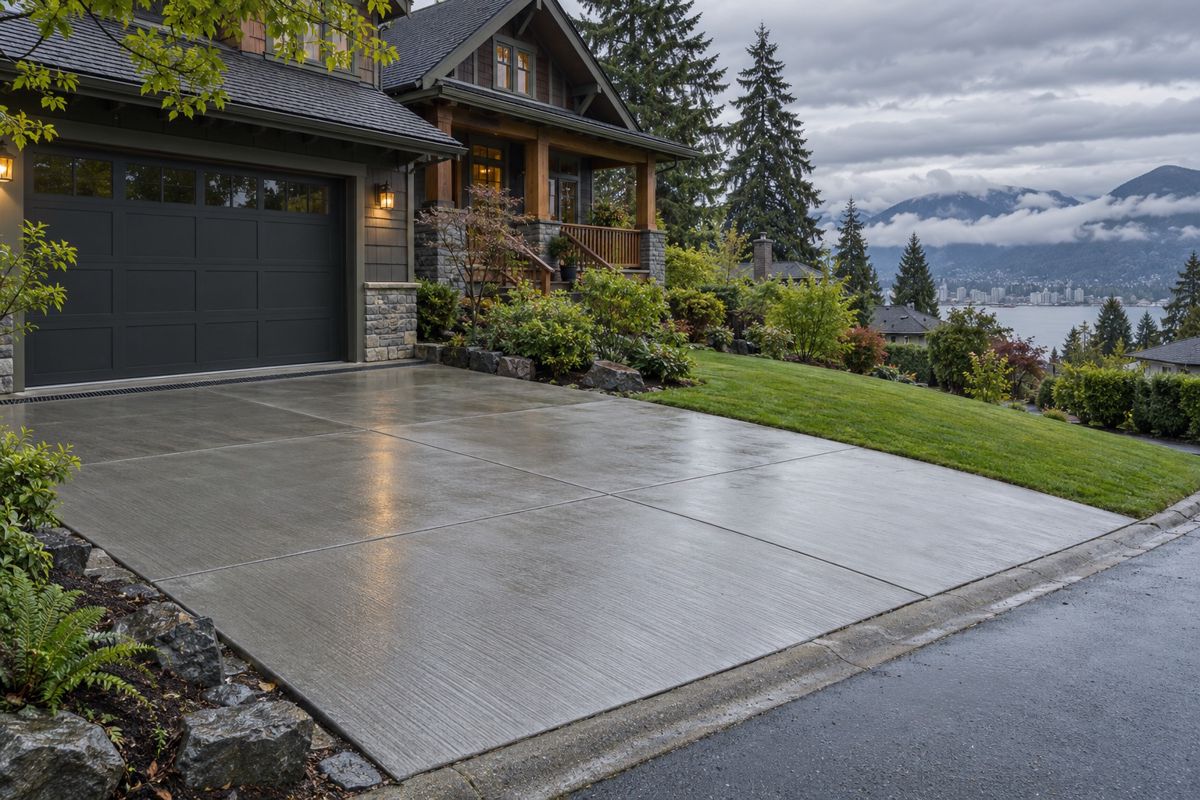
New broom-finished concrete driveway with control joints at a heritage Vancouver house

Driveways in Vancouver, BC

Concrete driveway in Vancouver, built to shed the rain

New driveways and full replacements, planned around drainage, slope and how your vehicles actually use the space.

  • Base and drainage planned before the pour
  • Old driveway removal and haul-away quoted in writing
  • Grip-friendly finishes for wet days

Step 1 of 3

What do you need?

What does a new concrete driveway in Vancouver involve?

A concrete driveway looks simple from the street, but most of the work is below the surface. A proper job covers six steps.

  1. Measure the area and mark the edges, including where the driveway meets the lane, the garage and the garden.
  2. Remove the old driveway, if there is one, and haul the broken concrete away.
  3. Dig out soft soil and build a compacted gravel base with a steady fall for drainage.
  4. Set the forms, add reinforcement such as rebar or mesh, and plan where the control joints will go.
  5. Pour, level and finish the concrete, usually with a broom texture for grip.
  6. Cure the slab and, if you want one, apply a sealer once it is ready.

Many home driveways are poured about 100 to 125 mm (4 to 5 in) thick, and thicker where heavy vehicles use them. We confirm the thickness for your site in the written quote. If you are weighing finishes for the whole yard, our stamped concrete patio page shows what decorative surfaces look like.

What problems do concrete driveways have in Vancouver?

Rain is the main enemy. It runs across the surface, soaks into the soil at the edges and finds every weak spot. These are common problems on older driveways here.

  • Standing water. Many older slabs were poured with too little fall, so puddles sit against the garage or the foundation.
  • Cracks from roots and soft ground. Large trees and wet fill under the base move over time.
  • Steep slopes. Driveways on hillside lots need extra grip and a careful drainage plan so water does not run into the garage.
  • Surface flaking. A cold snap on wet concrete can cause freeze and thaw damage, mostly on older or poorly mixed slabs.
  • Moss and algae. Shaded driveways stay damp, and moss makes them slippery.

If the damage is limited, concrete repair and resurfacing can sometimes avoid a full replacement. Only a site visit can tell you which route makes sense.

What changes the price of a concrete driveway?

Every driveway is different, so a fair quote depends on the details. These are the factors that move the price most.

  • Size and shape. More area means more concrete, more forming and more finishing time.
  • Demolition and disposal. Breaking out and hauling away an old driveway adds labour and dump fees.
  • Base and drainage. Soft ground may need extra excavation and gravel, and some sites need a drain or a channel.
  • Access. A tight lane, a steep slope or a long carry from the street can mean a pump truck or extra labour.
  • Thickness and reinforcement. Heavier use calls for a thicker slab and more steel.
  • Finish. A broom finish usually costs less than exposed aggregate, colour or stamping.
  • Permits and City work. A new or widened driveway crossing may involve City of Vancouver approval.

Ask for a written quote that lists these items, so you can compare two quotes line by line instead of by the total alone.

Timing depends on size, weather and how much preparation is needed, so treat any figure as a general guide. A typical single driveway often takes several working days from the start of demolition to the pour, and the pour itself is usually done in a day.

The concrete then needs time to gain strength. Many contractors ask you to stay off it on foot for a day or two and to keep cars off for about a week. Concrete keeps getting stronger for around four weeks, so avoid heavy loads such as delivery trucks or a moving van until then.

Rain can change the plan. Fresh concrete should be covered if showers arrive, and a pour is better postponed than rushed in a downpour. In a wet city like Vancouver, a flexible schedule is part of doing the job right. Ask your contractor how they handle weather delays before you agree to a date.

When should you call about your driveway?

Call when the surface has cracks wide enough to catch a pencil, when one slab edge sits higher than the next, when water pools near the garage, or when you plan work on the house that will bring a heavy truck onto the drive. It is easier to plan a new driveway before the old one fails completely.

You can also read about walkways and steps if the path beside the driveway needs work, or go back to the home page for an overview. When you are ready, use the call button or the short form and describe the job. We will walk through what is involved and quote it in writing before anything is poured.

  • Free written estimates
  • Local crews
  • Clear timelines
  • Site cleanup included

Step 1 of 3

What do you need?

Questions about concrete in Vancouver

How thick should a residential concrete driveway be?

Many home driveways are poured about 100 to 125 mm (4 to 5 in) thick, with reinforcement and a compacted gravel base underneath. A driveway that carries delivery trucks, an RV or heavy equipment usually needs more. The right figure depends on your soil and use, so we write the thickness into the quote for your site.

Do you remove the old driveway?

Yes, removal and haul-away can be included in a replacement quote. Breaking out old concrete is a real part of the labour and disposal cost, so it is listed as its own line. If your old slab is in decent shape, ask whether repair or resurfacing would do the job instead.

Does a concrete driveway need control joints?

Yes. Concrete shrinks as it cures, and joints give it a planned place to crack. They are cut or tooled at set spacing so any cracking stays tidy and straight. A driveway with no joints will usually crack in random places, and the repair is harder than the planning was.

Can a driveway be poured on a steep Vancouver lot?

Often yes, but steep driveways need extra planning. The finish must give grip in wet weather, water must be directed away from the garage, and forms and reinforcement need to hold the slope. Sometimes a retaining wall or a stepped layout is needed. A site visit is the only way to judge it.

Do I need City approval for a new driveway?

Often a driveway on your own lot needs less approval than the crossing where it meets the street or lane, which is City property. A new or widened crossing can require approval from the City of Vancouver. Rules change, so check with the City before you commit to a design or a date.

When can I drive on a new concrete driveway?

Many contractors suggest staying off it on foot for a day or two and keeping cars off for about a week. Strength keeps building for around four weeks, so avoid very heavy loads until then. Your contractor will give you the advice that fits the mix and the weather on the day.

How it works

1

Tell us about the project

Size, finish and goals.

2

Site visit and quote

We measure and price it in writing.

3

Form, pour, finish

Base, forms and finish done in the right order.

Ready when you are

Call now or request a quote online.

(604) 555-0140
Get my free concrete quote